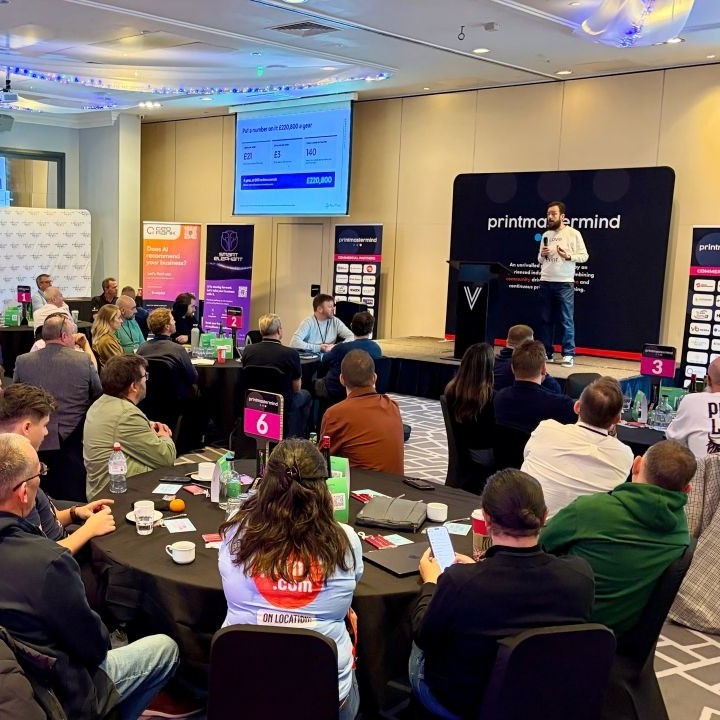

On 13 November I spoke at the Print Mastermind AI Summit in Blackpool. The talk was called "The cost of not automating", and it started with a simple claim: you're already paying for automation. You're just paying in labour.
Rather than argue the point, I asked the room. Before the close, everyone got a one-minute poll on their phone. Thirty-two people answered.
Three questions, under a minute
- If you could fix one of these tomorrow, which would it be?
- Roughly how much time does it cost your team each week?
- What's the one task everyone in your place hates?
What the room told us
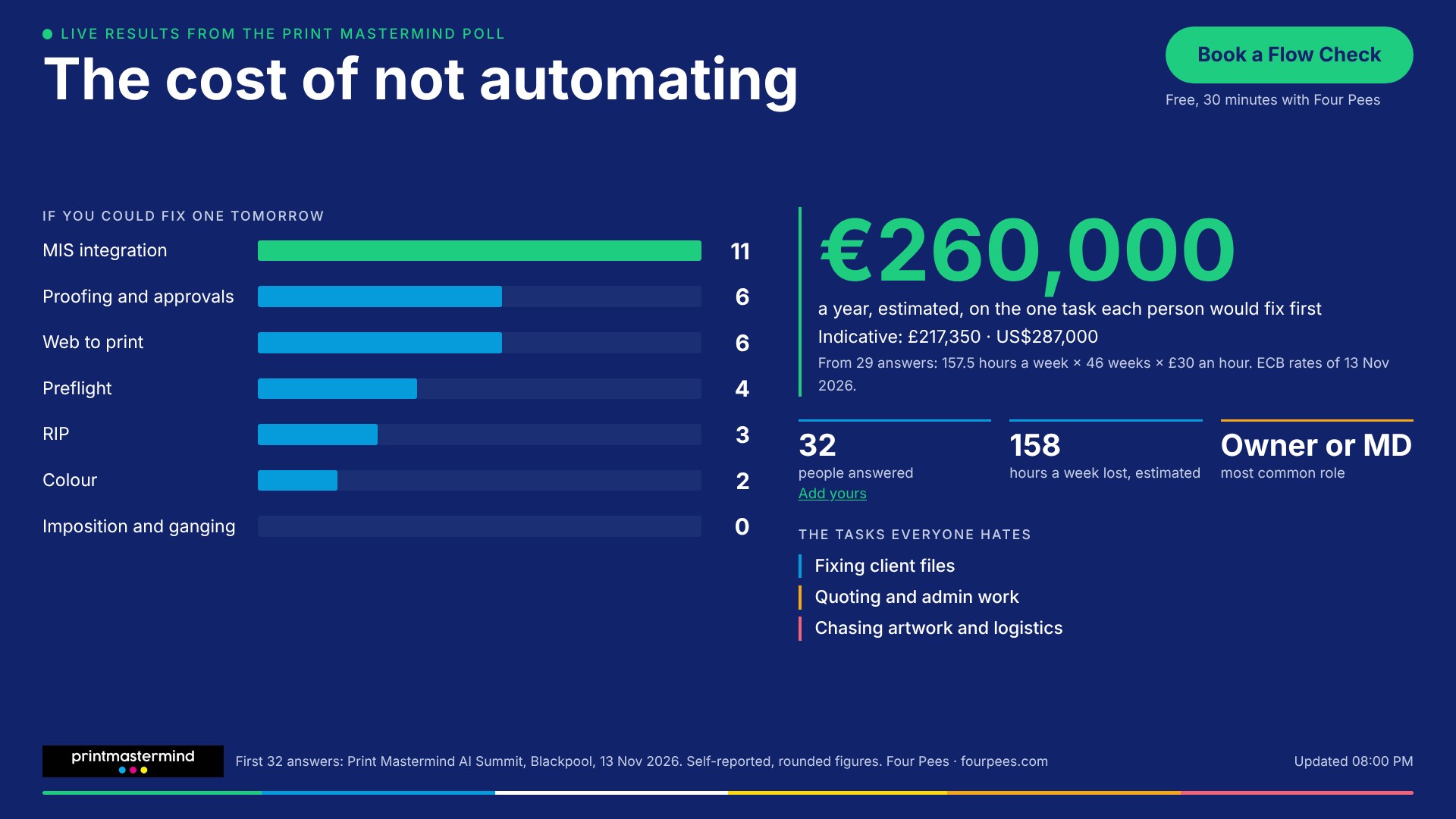
The live results page, which updates as new answers come in.
MIS integration came out on top: 11 of 32 would fix it first. Proofing and approvals, and web to print, followed with 6 each, then preflight (4), RIP (3) and colour (2). Nobody picked imposition.
Add up the hours people gave, and the room comes to 157.5 hours a week. At £30 an hour over 46 working weeks, that's €260,000 a year (£217,350), and that's only the one task each person would fix first.
The most common role in the room was owner or MD: half of everyone who answered. These are the people who sign the wage bill, and they know where the hours go.
We asked people to name the task their team hates most. The answers clustered into three themes:
- Fixing client files
- Quoting and admin work
- Chasing artwork and logistics
What it means
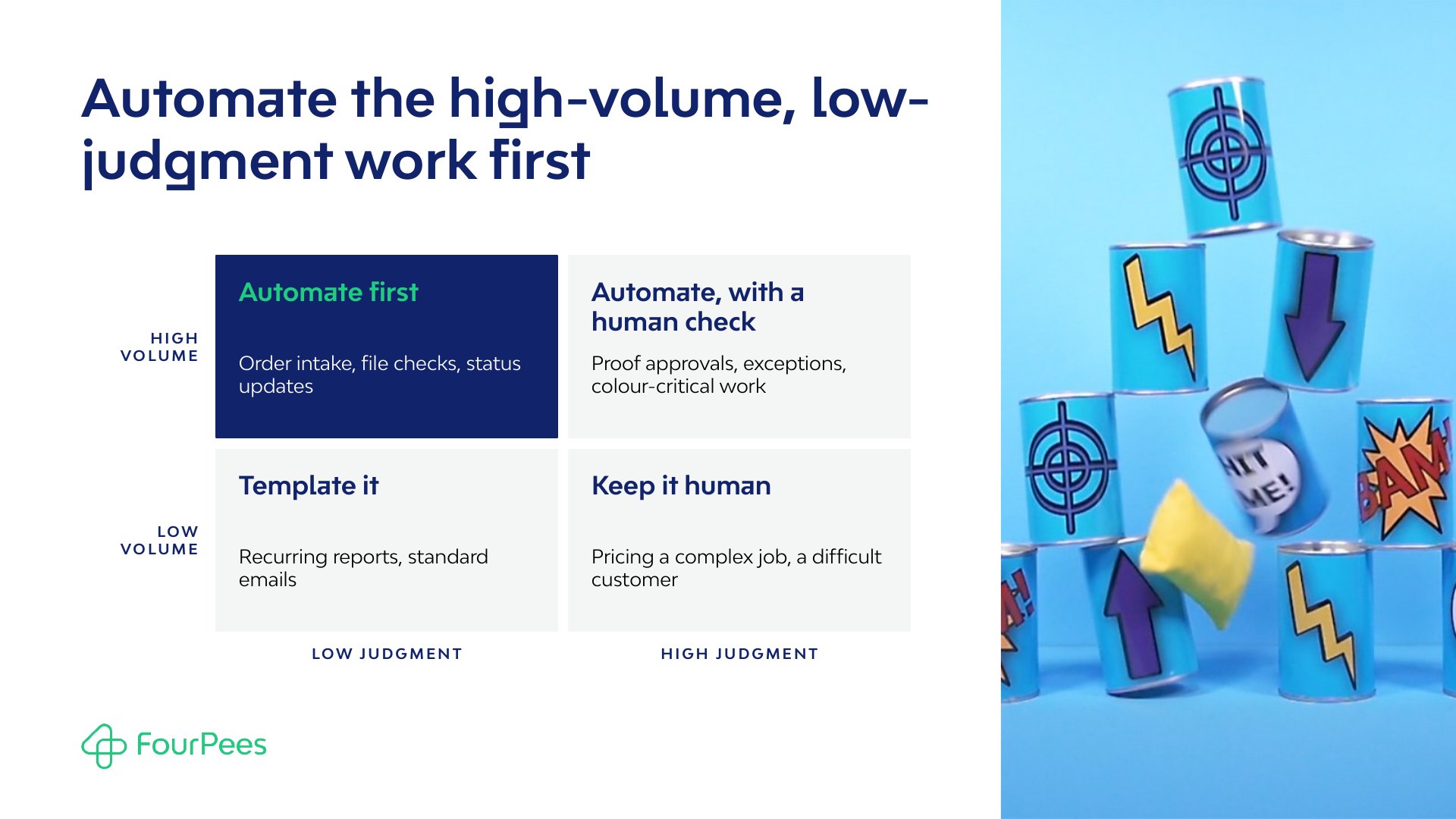
From the talk: automate the high-volume, low-judgment work first.
The top answer is the clearest signal. MIS integration is really about order intake: the job keyed into the MIS once, complete, and never re-typed. It's high-volume, low-judgment work, which is exactly where automation pays back first.
The hated tasks tell the same story from the shop floor. Fixing files, re-keying quotes and chasing artwork are all touches between systems that don't talk to each other.
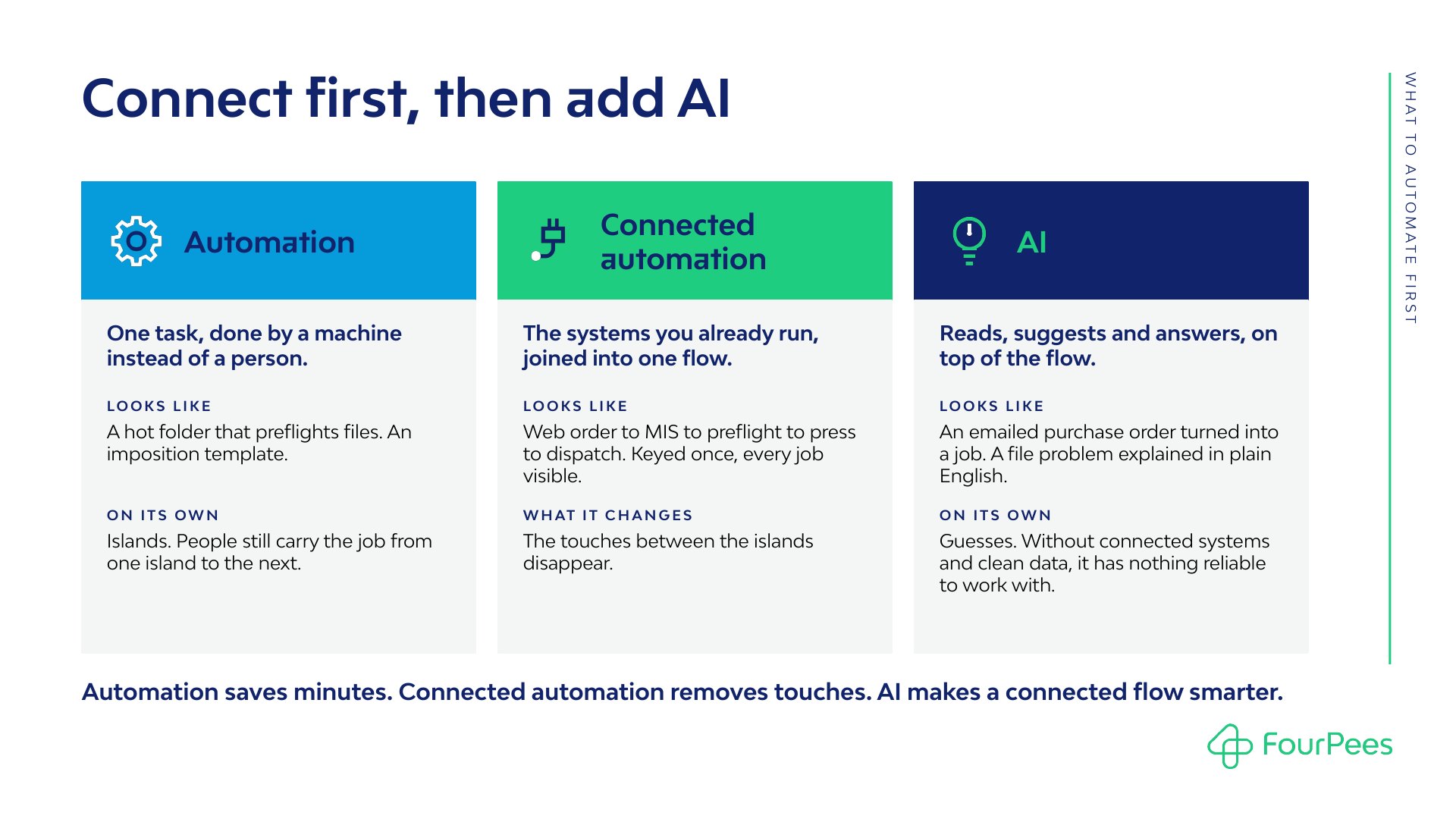
From the talk: connect first, then add AI.
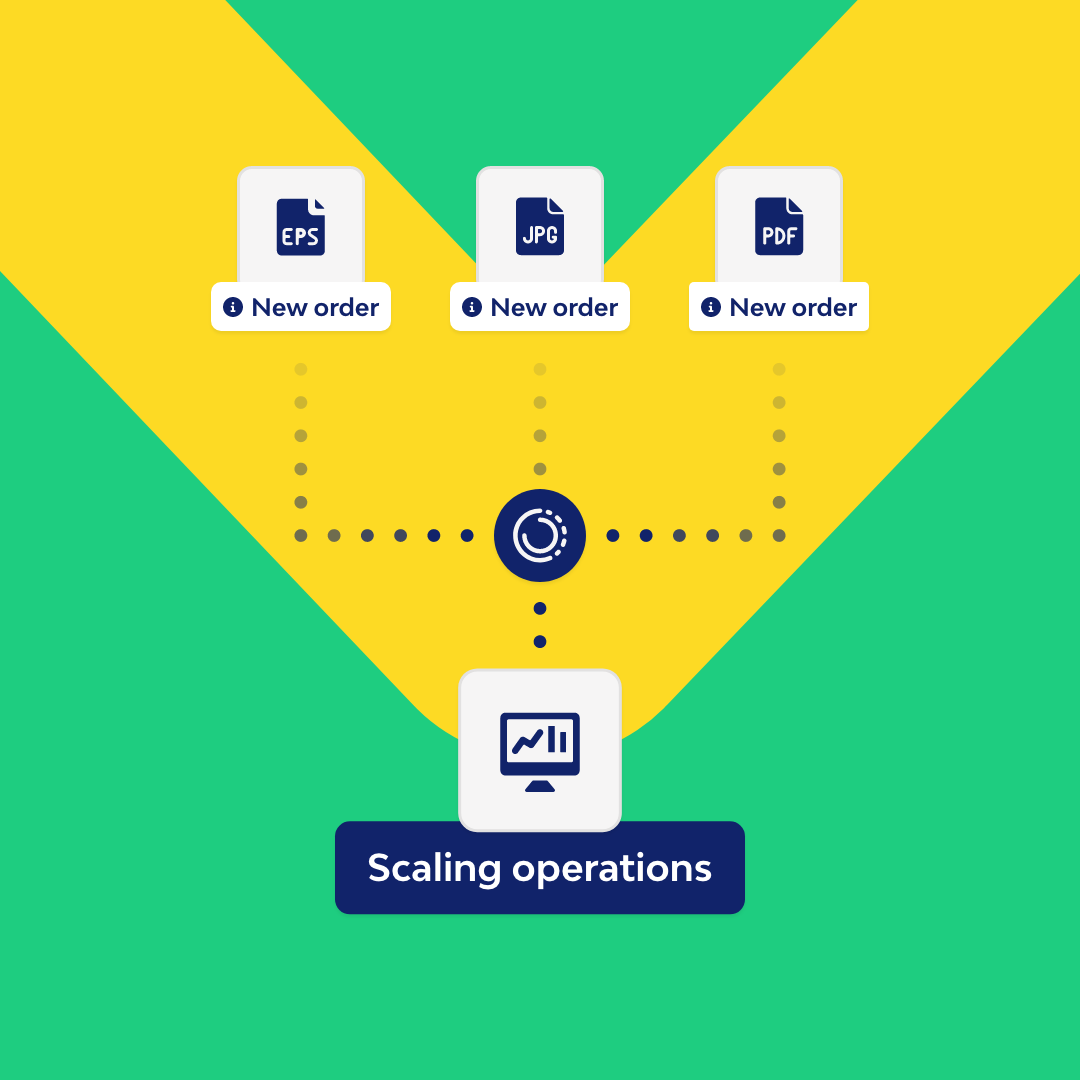
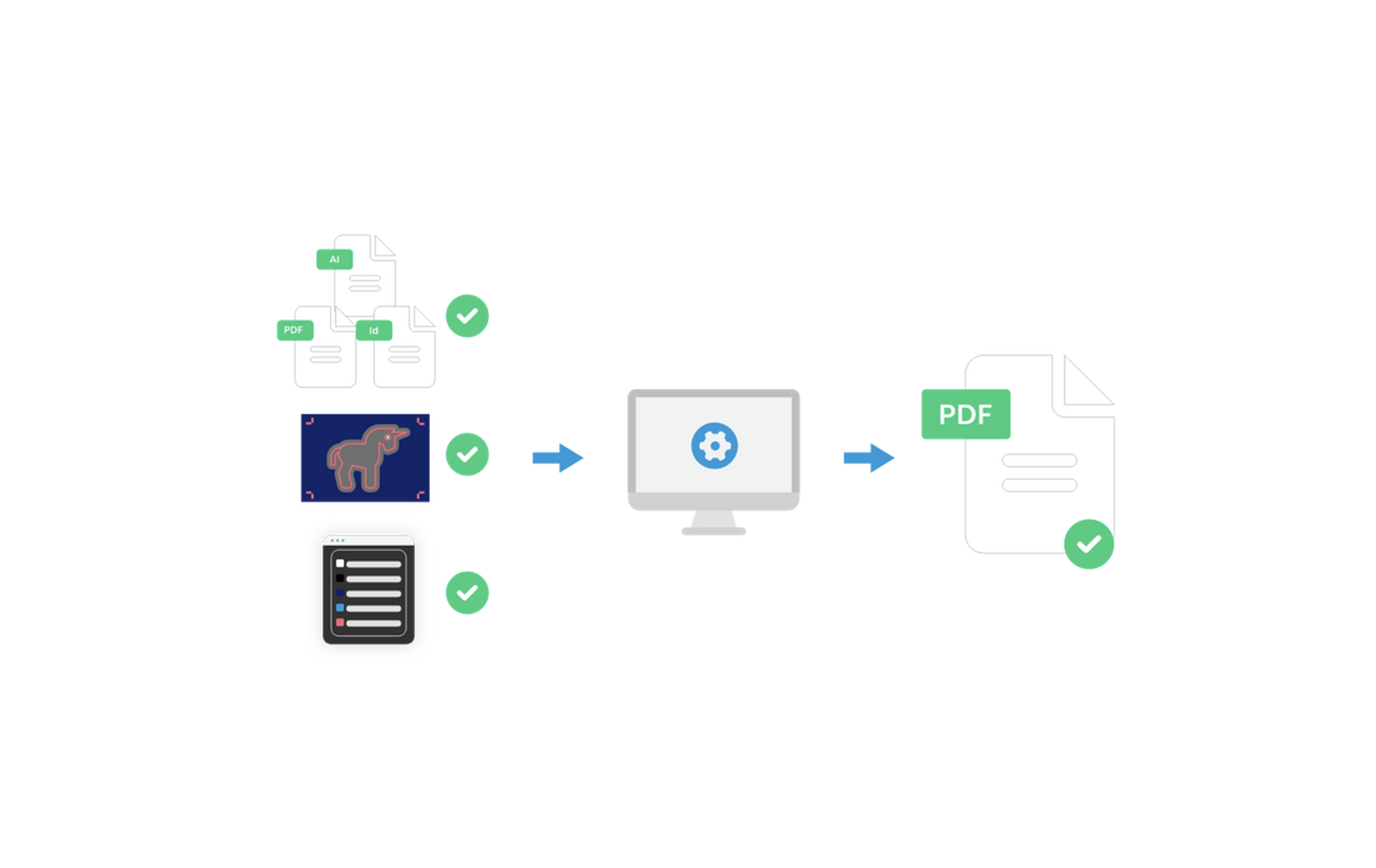
Automating one task at a time saves minutes. Connecting the systems you already run removes the touches. Once they're connected, AI has something reliable to work with: reading emailed purchase orders, explaining a file problem to a customer in plain English, answering "where's my order?" at 10pm.
The biggest cost doesn't show in these numbers at all. If every new order needs a person, your growth is capped by headcount, not demand. That's the work you quietly say no to.
Work out your own number
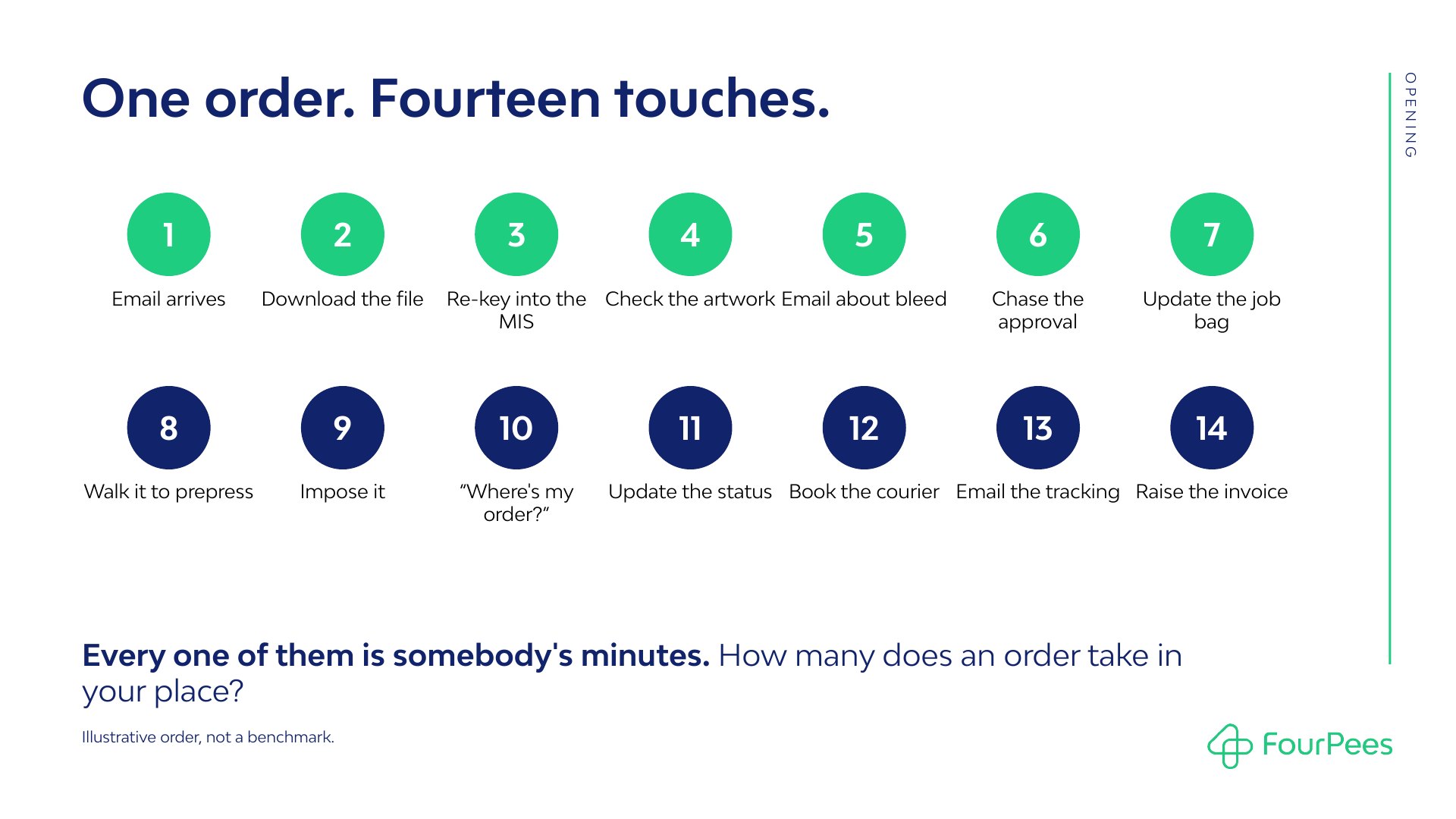
From the talk: one order, fourteen touches.
Take one order and count the touches, from the email arriving to the invoice going out. Then multiply: touches per order × minutes per touch × your hourly cost × orders a week × working weeks a year. Add what errors and reprints cost you. Then ask whether that's a number you want to keep paying.
Add your answer
The poll is still open, and every answer goes straight into the live results. Thirty-two people from one room is a start, not a benchmark. The more printers answer, the clearer the picture gets for everyone.
Take the one-minute poll See the live results
Find your first flow
If one of those tasks is eating hours in your business every week, start there. A Flow Check is a free 30-minute call with Andy Banks or me. We look at where your orders stop and wait, and agree the first flow worth connecting.
Book a meeting Leave us a message
How the numbers were worked out
The figures come from 32 attendees of the Print Mastermind AI Summit in Blackpool, 13 November 2026, who chose to answer. They're self-reported and rounded. Hours are the midpoints of the ranges people picked; 3 "not sure" answers were left out. Cost assumes £30 an hour fully loaded over 46 working weeks, converted to euros at the ECB reference rate of 13 November 2026. The live results page updates as new answers come in, so its totals will move on from the Blackpool snapshot.
Tom Peire, CEO, Four Pees. Cover photo: Print Mastermind.